This is a cache of https://www.fleetwoodusa.com/en-us/blog/miracle-house-case-study. It is a snapshot of the page as it appeared on 2026-07-28T00:28:24.570+0000.
Specifying Fenestration Systems for Wildfire Risk: The Palisades’ “Miracle House” | Fleetwoodusa Skip to Main Content

Specifying Fenestration Systems for Wildfire Risk: The Palisades’ “Miracle House”

Conscientious Choices Contribute to Home’s Resilience 

In early January of 2025, wildfire conditions in Southern California were dangerously optimal. The region was in a moderate drought, lacking measurable rainfall for more than six months. A high-pressure system to the north and east was fueling powerful Santa Ana winds gusting up to 80 mph. The National Weather Service issued red flag warnings and residents were cautioned to be even more vigilant when it came to anything that could spark a wildfire.  

On January 7, a fire began in the Santa Monica Mountains. Within 14 hours, what was initially a 10-acre fire ballooned to nearly 3,000 acres. The area’s steep terrain made fighting the fires difficult, igniting what would become a prolonged regional disaster. In more elevated areas, 20% of fire hydrants eventually ran dry. Whole neighborhoods burned.   

All told, the Palisades Fire burned for 24 days before full containment. In total, more than 23,000 acres were burned, destroying wide swaths of Pacific Palisades, Malibu, and Topanga. More than 6,800 structures were affected, and 12 lives were lost. It was the most destructive wildfire on record in the city of Los Angeles.  

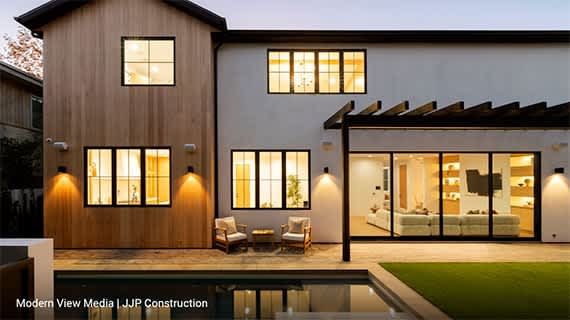
But among the charred landscape, some structures were spared. One of those homes, dubbed “Miracle House,” escaped intact – and it did so with Fleetwood.  
Planning in Advance and a Little Luck 


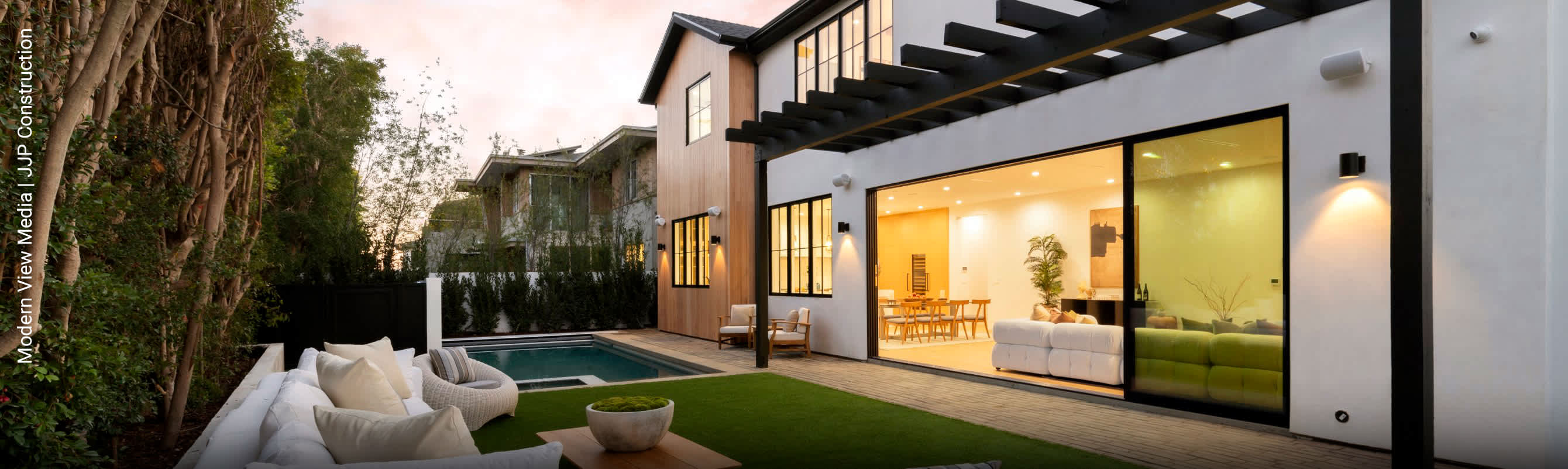
Designed by Shelter Homes and built by JJP Construction, the surviving wood-and-stucco clad home stood tall among the devastation of the surrounding neighborhood. Its fortitude is part good fortune, part smart planning. 

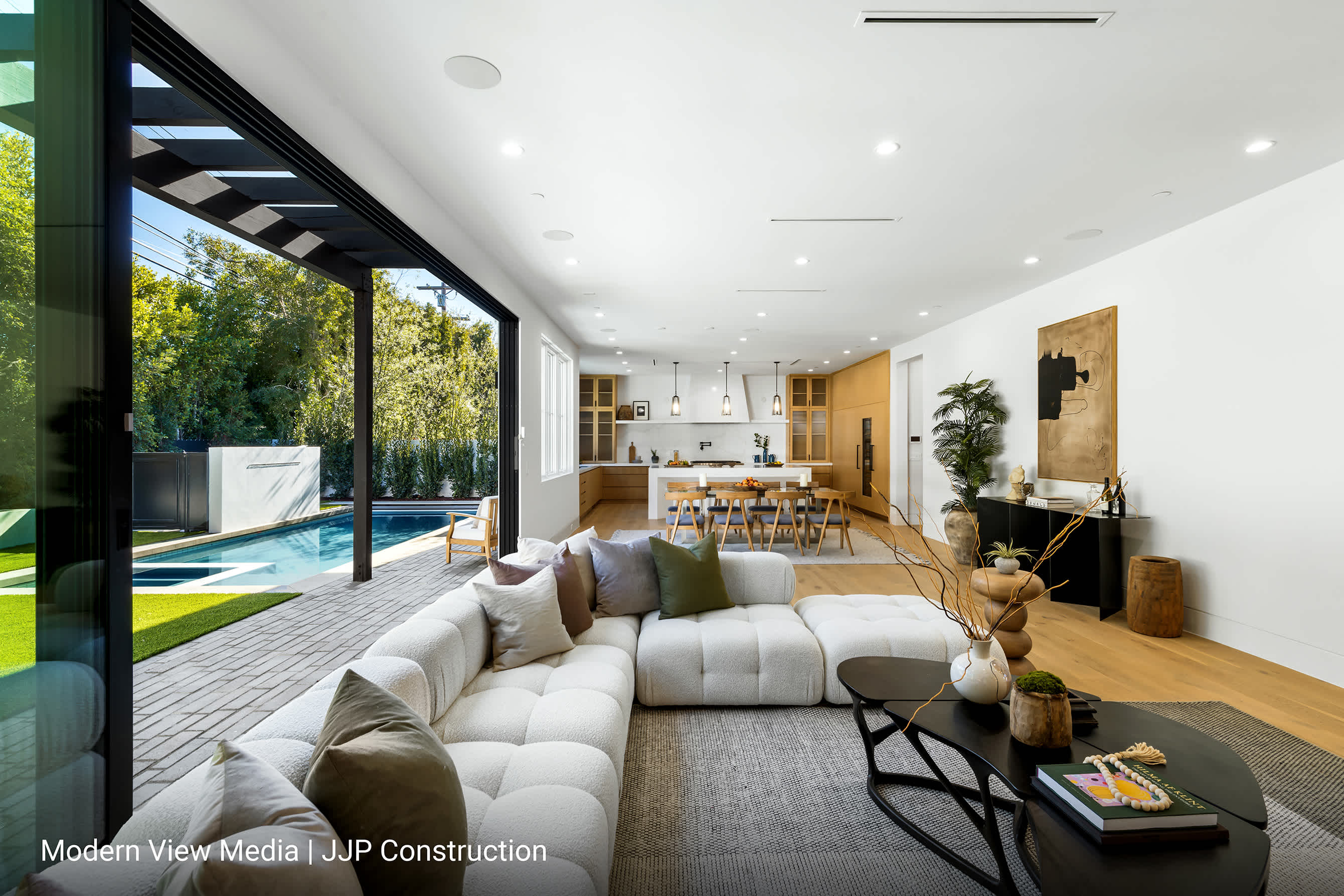
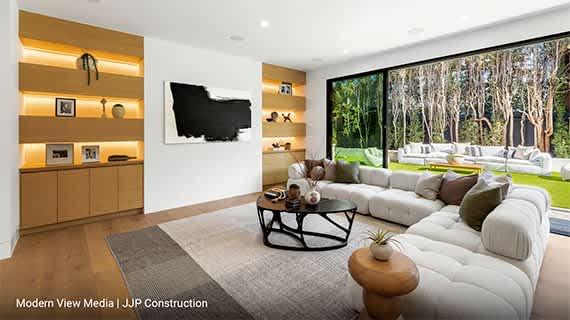
From its inception, the home was designed thoughtfully just as much as it was beautifully. The combination of tactful building material specification, clean landscape architecture, and the use of fire-resilient materials delivered a more resilient structure with fewer elements susceptible to fire. This included specifying Fleetwood’s 3070 Multi Slide & Pocket Door System, which features tempered glass and fire-resilient aluminum extrusions.  

Though the home may have been more prepared than others, even the builder concedes that its survival could not be chalked up to it conscientious building material choices alone. 

“It also survived out of sheer luck,” said Jason Pietruszka, general contractor/developer for JJP Construction. “Nothing is truly fireproof. What we’re doing when we build is extending the ability for a house to survive.” 

As a fire resilient product, Fleetwood products can be specified with a variety of high-performance tempered glass. They are sustainable, eco-friendly, and meet building code requirements. 

“It’s all in the details,” added Pietruszka. “product and service matter. Fleetwood meets all expectations on design aesthetic, meets all city codes and standards, and best of all, they service their products.” 

A Fire-Resilient Ingredient

Like everywhere, homebuilding in Southern California consists of a series of deliberate choices. Fleetwood products meet California Wildland-Urban Interface (WUI) and Title-24 requirements, offering a level of fire resilience that surpasses typical plastic or wood components. 

“[Fire protection] does come up,” said Mike Chavez, region manager for Fleetwood, illustrating a sample conversation on the topic. “‘Are you guys fire rated?’ ‘No, we are not. But we are fire resistant. Here are the components we use. Here’s the durability. Here’s information about how hot the glass can get. The aluminum is not going to melt.’” 

This transparency helps architects and homeowners design a home that offers both beauty and long-haul protection with eyes wide open.   

Fleetwood’s competitive advantage allows them to deliver a product that can be resilient in the face of fire while also providing jaw-dropping aesthetics. This lies in their material choices.   

“Aluminum is a very strong alloy,” said Chavez. “We use T6063, which is good for strength, durability, and aesthetic. It can exceed 500°F worth of heat. Aluminum really stands a lot better than vinyl, which is plastic and has corrosive toxins that will disperse into the air. Wood obviously burns a lot quicker too

A Choice That Lasts

Fleetwood windows and doors feature extrusions with AAMA 2605 painted or Class I anodized finishes. For additional durability, each product wears marine-grade 300 series stainless steel hardware with electropolished brushed stainless or painted surfaces.  

Specifying Fleetwood is a decision for the long term—one backed not only by masterful craftsmanship, but also the industry’s only true, transferrable lifetime warranty regardless of location.  

In a wildfire-prone locale like Southern California, Fleetwood offers ample protection from the elements, giving homeowners added assurance and greater peace of mind.  

Share this page on: